info@fmf.co.th
 (+66) 097-034-6625
 LINE it!
Choose an AI consulting company in Thailand by what it will deliver into your business, not by how good its demo looks. A strong partner starts from your process and your numbers, builds the software and data work around the model, connects it to the systems you already run, tests it against your own cases, and hands over something your team can operate. If a proposal is mostly about the model, keep looking.
This guide is for a manager comparing two or three AI providers for a real project: an AI assistant, document or image recognition, a forecast, or automation of a repetitive back-office task. It covers what to compare, the questions that separate serious teams from slide-deck vendors, and the red flags we see most often.
Start with the problem, not the vendor
Before you talk to anyone, write down four things: the workflow you want to change, who uses it, how long or how costly it is today, and what a good result would look like. “Reduce manual checking of supplier invoices” can be tested. “Use AI to transform operations” cannot.
A good consultant will push on this brief. They should tell you when a plain rule, a report or an integration solves the problem, and AI is not needed. A provider who says yes to every idea is selling, not advising.
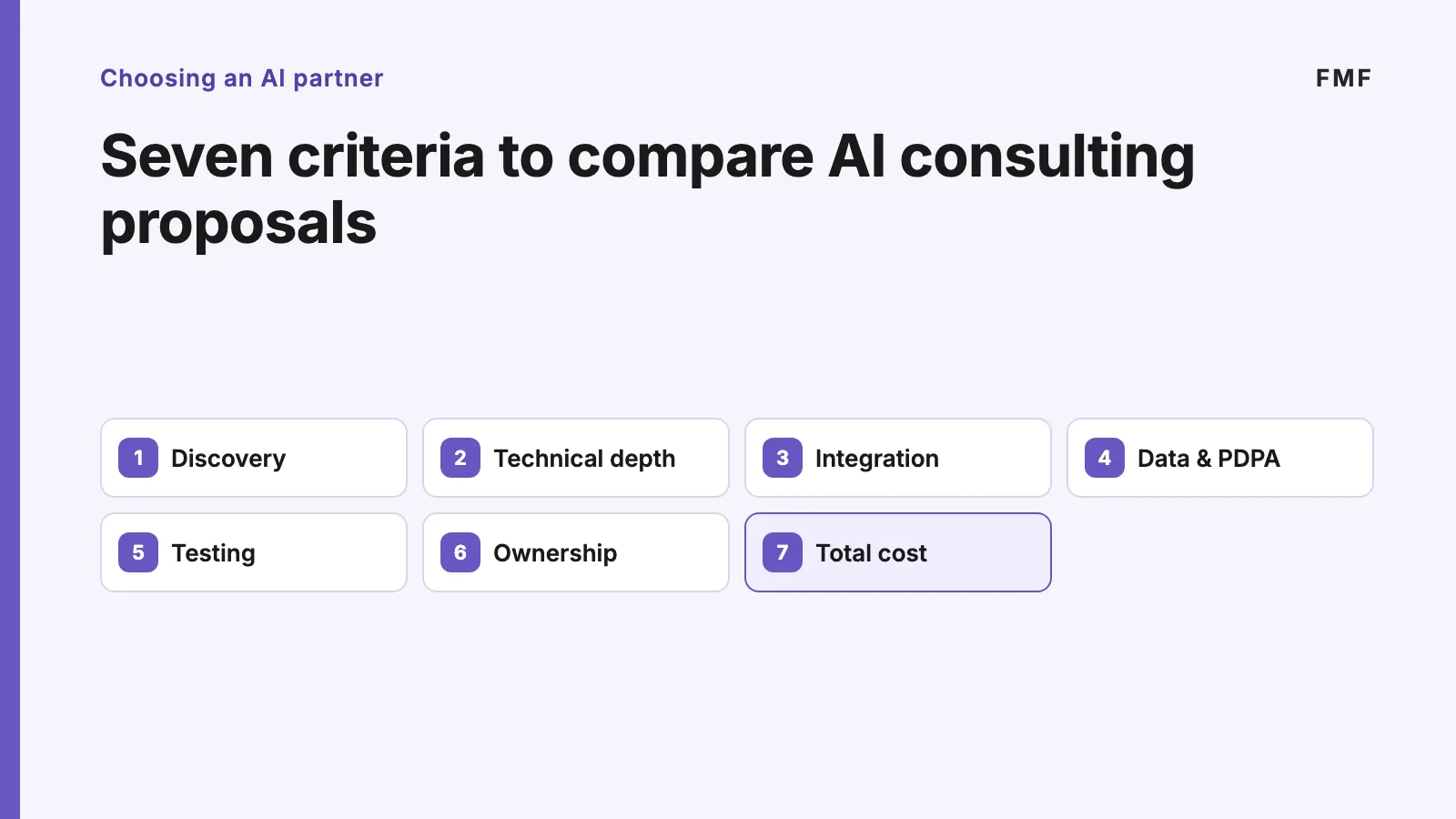
What to compare in AI consulting proposals
Give every provider the same scenario and the same acceptance criteria, then compare their answers against this table.
| What to compare | What a good answer looks like | Red flag |
|---|---|---|
| Business discovery | They map your current process, ask for real examples and propose a measurable target before choosing a model. | A price and a tool name after one call. |
| Technical depth | The team includes people who build production software and handle data, not only people who write prompts. | The whole solution is one chatbot plug-in. |
| Integration | They name how the result reaches your ERP, CRM, website or internal portal (for example through an API) and who builds it. | “You can connect it later.” |
| Data and PDPA | They explain what data leaves your systems, where it is processed and stored, who can see it and how long it is kept. | “Don’t worry, it’s secure.” |
| Testing | They agree a test set made from your own cases, a pass mark, and a human check for uncertain results. | A guaranteed accuracy figure before seeing your data. |
| Ownership and handover | You receive code, configuration, documentation and training; the contract says who owns what. | Only one person understands the system. |
| Total cost | The quote covers data preparation, integration, testing, hosting, licences and running costs after launch. | A low pilot price with the rest “to be discussed”. |
The seven criteria in practice
Discovery that ends in numbers
Ask what the provider will deliver in the first phase. The useful answer is a short document: the process as it works today, the data available, the target (for example, minutes per task or error rate), and a ranked list of use cases. If that document does not exist, the project starts on assumptions.
Technical depth beyond the model
Most of the work in an AI project is not the model. It is collecting and cleaning data, building the interface the staff will use, handling errors, and running the system on a server that stays up. Ask who will do each part, and whether they are the same people who will be on your project.
Integration with your existing systems
An AI result nobody can use inside the normal workflow is a demo. Ask where the output lands: in your CRM record, your inventory system, your intranet, your website. Ask how the AI service is called (a REST API is the usual answer), how it behaves when your system is slow, and what happens to a request that fails.
Security and PDPA
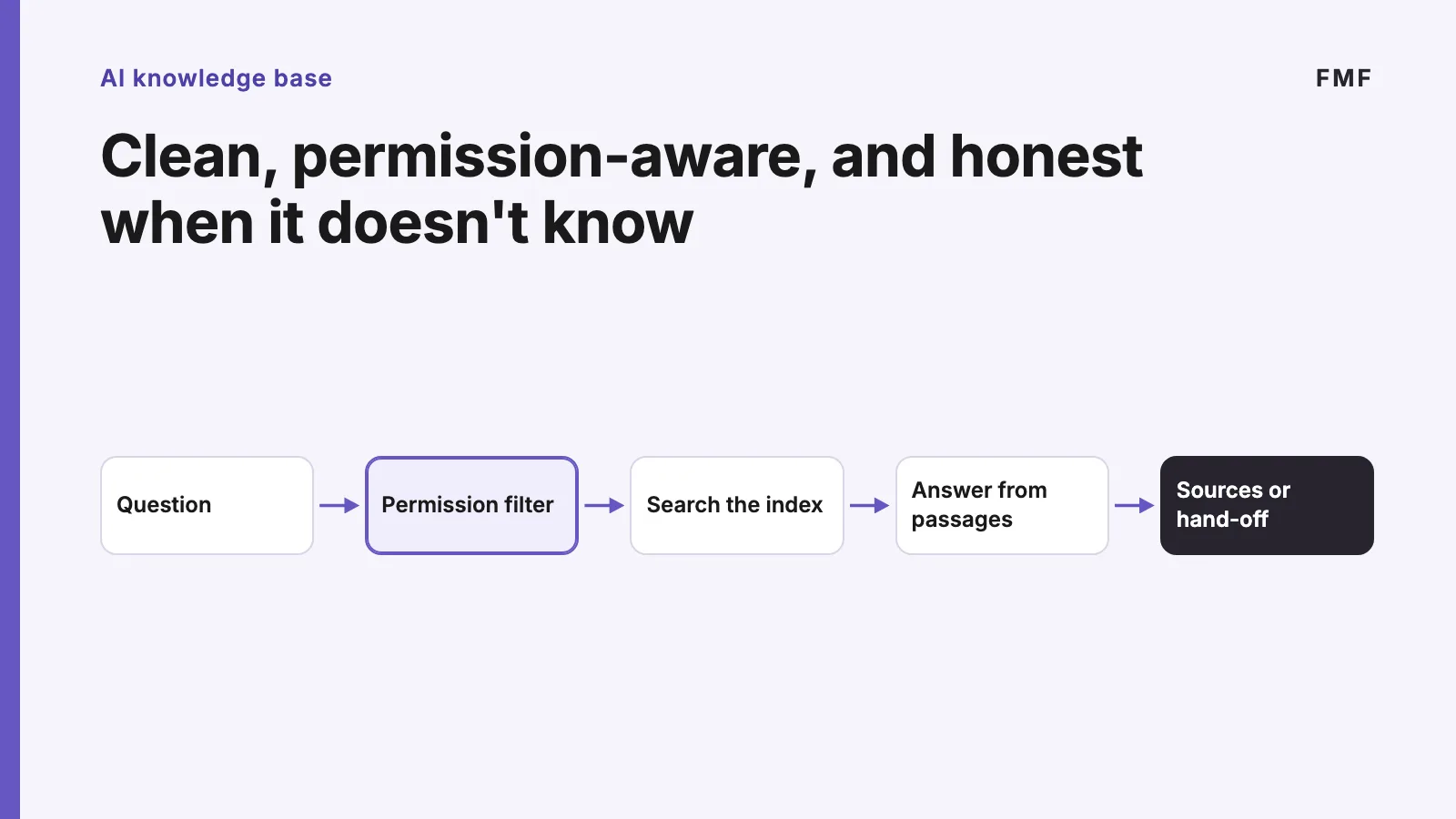
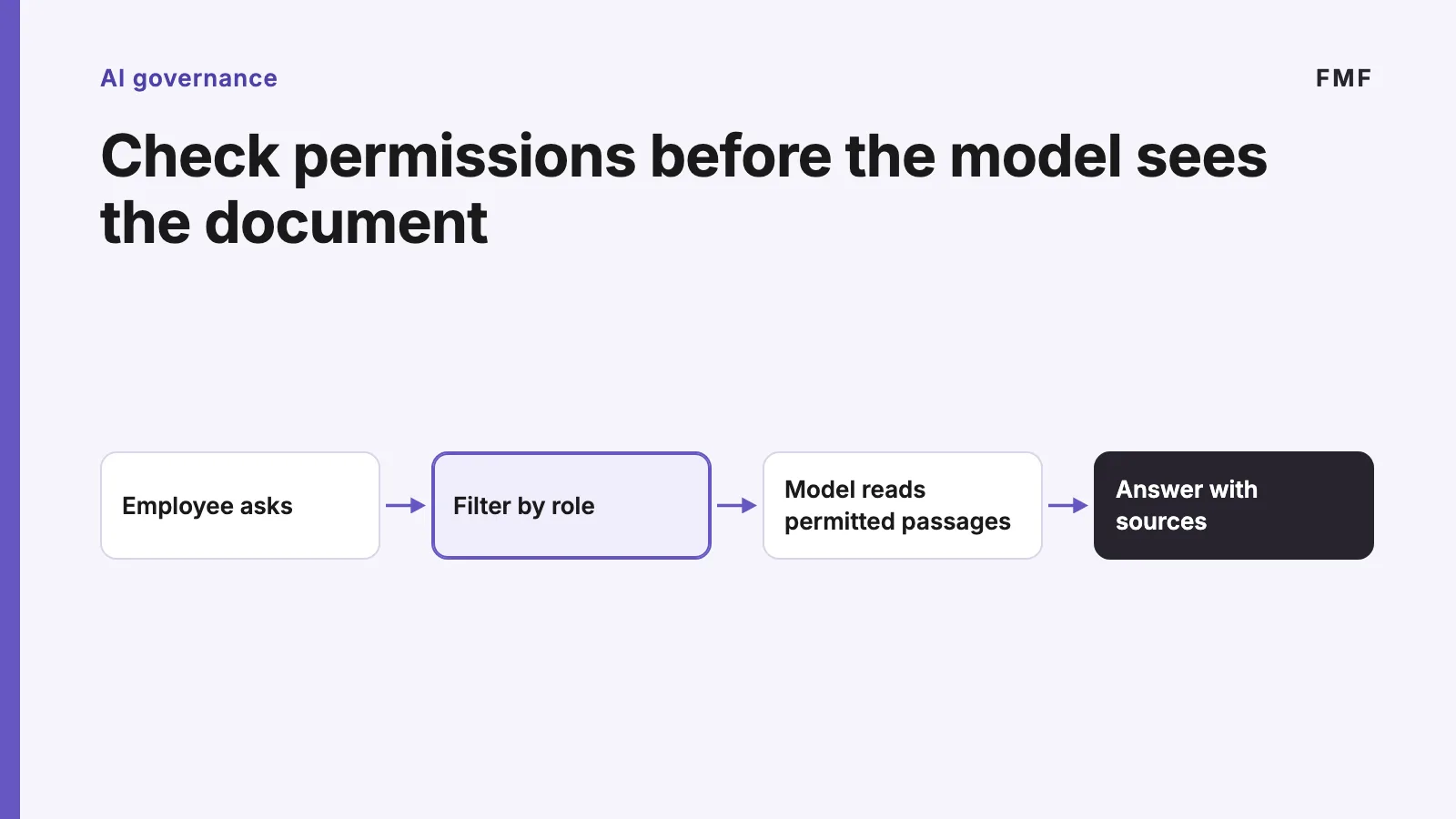
Ask for a simple data-flow diagram: what goes to the model, whether any third-party AI service sees it, where it is stored and who has access. If personal data is involved, a serious provider will raise Thailand’s Personal Data Protection Act (PDPA) themselves. The Office of the Personal Data Protection Committee publishes the Act and its notifications in English; the rest of this paragraph is general information, not legal advice, so involve your own legal adviser for your case.
Evaluation discipline
No one can promise accuracy before they have seen your data. What you can ask for is a test set built from your own examples, including the awkward ones, a pass mark agreed in advance, and a plan for results the system is unsure about, usually routing them to a person. After launch, someone should keep measuring.
Ownership and handover
Settle in writing who owns the code, the trained model, the prompts and the configuration, whether you can move to another model or host, and what documentation and training you get. The aim is that your team can run the system, or hand it on, without starting again.
Total cost
Two quotes are only comparable if they cover the same scope. Ask each provider to price the same list: discovery, data preparation, development, integration, testing, hosting and licences, monitoring and support after launch, and staff training. A cheap pilot that leaves integration and data preparation out will cost more than a full quote once you add them back.
Then ask what the project must save or earn to justify the total. If the provider cannot help you answer that, they have not understood your business case.
Questions to ask every provider
- Which use cases would you advise us not to do with AI, and why?
- What has to be true for this project to pay back?
- Where is our data processed and stored, and which third parties see it?
- How will the system connect to our existing software?
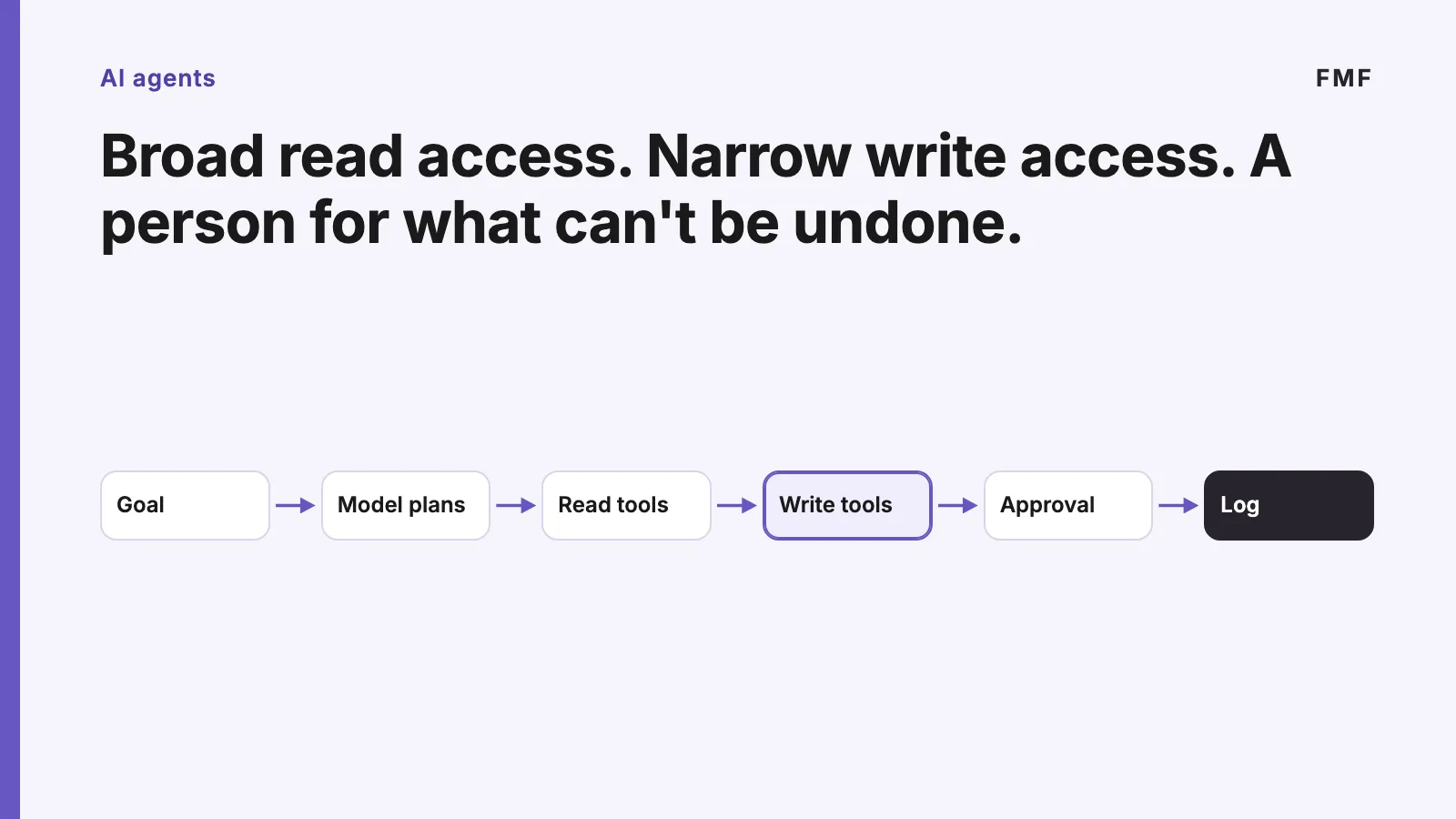
- What happens when the AI is wrong, or the service is down?
- How will you test it, and on whose examples?
- What do we pay for every month after launch?
- Can we switch to another model or hosting later without rebuilding?
Red flags
- Guaranteed accuracy quoted before anyone has looked at your data.
- “AI transformation” packages with no named process, user or metric.
- No integration plan. The AI works in a separate tool your staff must copy and paste from.
- Pricing that counts only the model or usage fees, and ignores data work, integration, testing and support.
- One-person dependency or prompts and settings that exist only in the vendor’s head.
- No test plan, or testing done only on the vendor’s own sample data.
How FMF runs an AI project
FMF is a Bangkok company that has built websites, software and digital systems since 1999. Our AI implementation service combines business analysis, software development, data work and integration with existing systems, which is the combination the table above asks for. The stages below are the ones our published case studies describe.
FMF's five delivery stages, and where each one appears in our published work
The stages our published case studies describe, with the evidence each case gives.
- 1 · AuditStudy the current process or IT systemKIA: the dealer upload process. AI Wiki: the client's IT system.
- 2 · SpecificationWrite down AI and integration requirementsAnswers "discovery that ends in numbers"
- 3 · DataCollect and label training or knowledge dataKIA: 1,000+ labelled images per angle. AI Wiki: full documentation.
- 4 · BuildModel or assistant, connected to client systemsKIA: REST API to the back end. AI Wiki: role-based access.
- 5 · DeployRuns on the infrastructure it needsKIA: dedicated server, real-time processing
Two delivered projects show how that works.
AI photo sorting for KIA Used Cars. Dealers uploaded vehicle photos by hand with no standard order, which caused display errors on the portal. FMF assessed the upload process, wrote the technical specification, collected and labelled training images, and trained a deep-learning model to recognise 35 vehicle angles using more than 1,000 images per angle. The model was connected to the client’s back end through a REST API and deployed on a dedicated server for real-time processing. The case page reports more than 95% recognition accuracy and sorting that went from 15 minutes per vehicle by hand to under 1 second, across 2,000–3,000 vehicles. Read the KIA Used Cars case.
AI Wiki for an automotive company. For a client under NDA, FMF began with an audit of the IT system and wrote full technical documentation. It then built a Wiki.js-type knowledge base with role-based access and an AI assistant that answers from that documentation, which helps new staff get started faster. Read the AI Wiki case.
Both started with an audit and ended with a system connected to the client’s own environment, not a stand-alone demo. Both are automotive projects; whatever your industry, the sequence is the same.
Does a local partner matter?
It helps, for practical reasons: working sessions with your team in your time zone, Thai-language data and documents, familiarity with Thai business systems, and an accountable company in the same jurisdiction. But location does not prove quality. Ask for delivered projects, the people who built them, and what happened after launch.
Sources
- PDPC: Personal Data Protection Act B.E. 2562 (2019), English translation.
- PDPC: Notifications of the Personal Data Protection Committee (security measures, breach notification, cross-border transfers).
- ETDA AI Governance Center: AI Governance Guideline for Executives (2023), PDF.
- FMF: KIA Used Cars AI photo sorting and AI Wiki portal case pages.
FAQ
Should we hire a consultant or build an AI team in-house?
Many companies do both in sequence. An external team shortens discovery and covers skills you do not have yet, while you name an internal owner who learns the system. If you will not keep anyone who understands it, plan for a long-term support contract instead.
Is a proof of concept necessary?
Usually, if it tests the riskiest assumption (for example, whether your photos or documents are good enough for the model) and has a clear route to production. A proof of concept that cannot be deployed is a presentation.
What should the first deliverable be?
A short, ranked list of use cases with a technical outline, followed by one pilot with a measurable target. You should be able to say after the pilot whether it worked, using numbers you agreed before it started.
Do we need our own data before we start?
Often yes, but not always in large amounts. Some solutions work from your documents or databases, others need labelled examples. The audit stage should answer this before you commit to a build.
Next step
Write a one-page brief with the process, the users, today’s baseline and the result you want. Send it to FMF and we will start where this guide says a good partner should: with questions about your numbers, your data, the systems the result must reach and what you will pay to run it after launch.
Send us your brief. We will reply with the questions we need answered, which use case we would start with, and how we would run the pilot so you can measure it.
Discuss your AI project with FMF Chat with us on LINE