info@fmf.co.th
 (+66) 097-034-6625
 LINE it!
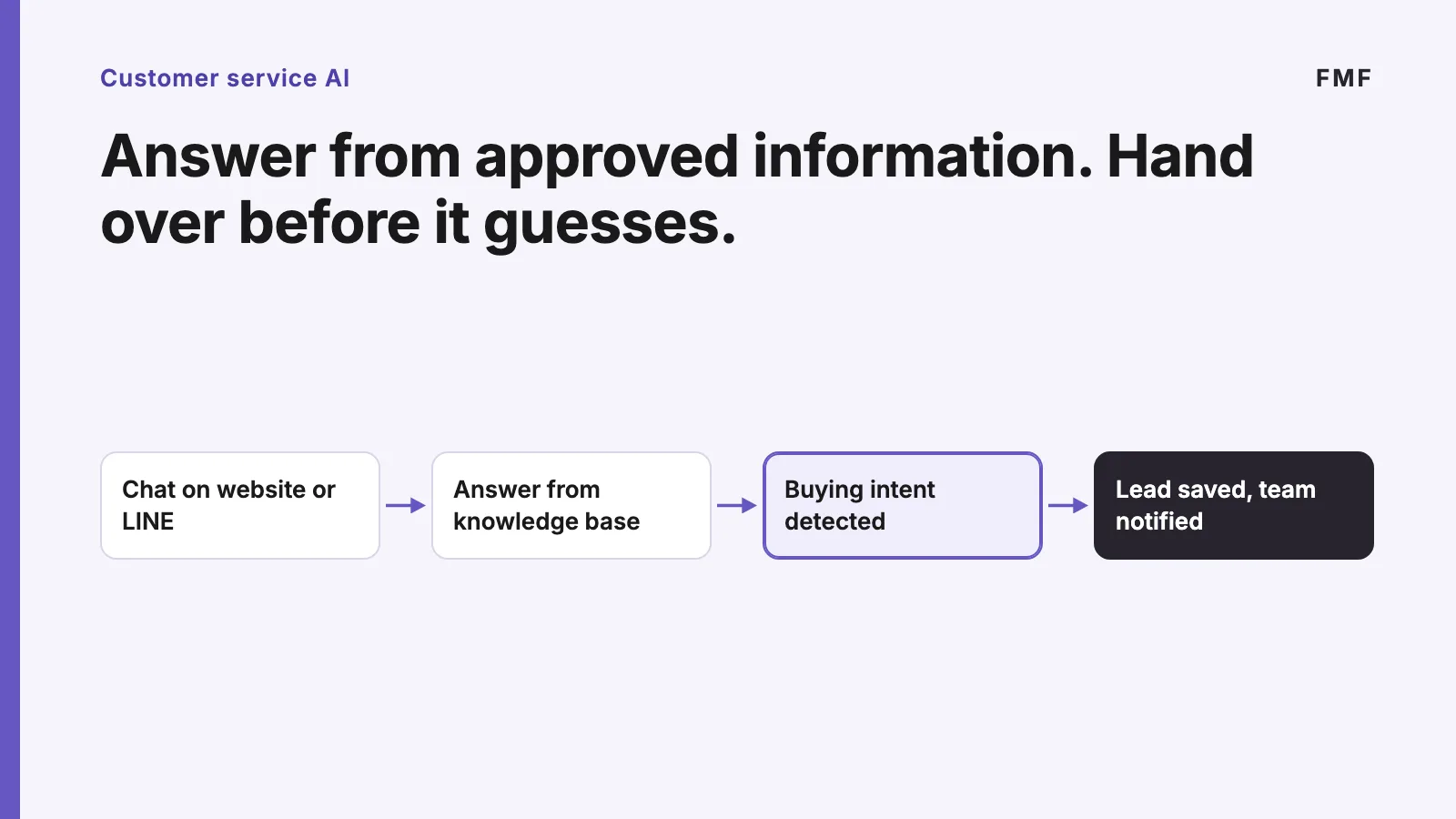
An AI customer service agent answers customers' questions on your website, LINE or other chat channels, around the clock, from your own approved information, and hands the conversation to a person when it should. It pays off when a large share of incoming questions are repeated and answerable from documents, and when the hand-off to staff is designed as carefully as the answers. It disappoints when it is left to improvise prices, promises or policy.
This guide is for owners and service managers deciding whether to add an AI agent to customer chat. It covers what such an agent can and cannot do, how a well-built one is wired, the hand-off and lead-capture design, PDPA points for chat data, and how to measure it. It uses the architecture of the AI chat widget FMF built in 2025 as a worked example.
What an AI customer service agent does, and what it should not
| Good fit for the agent | Keep with people, or behind approval |
|---|---|
| Opening hours, locations, service descriptions, how-to questions | Final prices, discounts and quotations that are not published |
| Explaining published policies: delivery, returns, booking conditions | Exceptions to a policy, refunds and compensation |
| Collecting the details a person will need: product, date, budget, contact | Complaints, angry customers, anything legal or medical |
| Answering in Thai and English from the same facts | Changing an order, booking or account without confirmation |
| Routing: which department, which branch, which form | Anything the knowledge base does not cover |
The right column is not a list of things AI cannot do. It is a list of things where a wrong answer costs money or trust. An agent can draft a reply for any of them; a person should send it.
How a customer service agent is wired
FMF built an AI chat widget in 2025 for websites, as an internal product we can configure per client site. Its structure is a useful reference, because each part answers a question buyers usually forget to ask.
Architecture of the FMF AI chat widget
Internal FMF implementation (2025), described from its source code. Each website is a separate project with its own settings and data.
- WebsiteOne script tag with a project IDInstalled through Google Tag Manager; no other code on the site
- SettingsPer-site project in an admin panelLanguage, colour, position and an on/off switch, changed without touching the site
- AnswerModel with that project's instructions and knowledgeConversation history kept per visitor thread
- LeadBuying intent detectedAsks for name and phone or email; extracts them as structured data
- Hand-offLead saved and the team notified by emailA person takes over from there
Three design choices in that structure matter for any business, whoever builds the agent:
- An off switch you control. If the agent starts answering badly, a manager must be able to turn it off in seconds, without a developer and without a site release.
- One configuration per site or brand. A group with several brands or branches needs separate knowledge, language and tone for each, and staff who only see their own conversations.
- Leads as data, not as chat text. A sales enquiry buried in a transcript is easy to miss. The agent should save name, contact and need as fields and notify the right person.
Design the hand-off before the answers
The hand-off is where an AI agent earns or loses its value. Decide these points first:
- Triggers. The customer asks for a person; the question is outside the knowledge base; the topic is on the "people only" list; the customer shows buying intent; the agent has failed to help twice.
- What the agent says. One fixed sentence that admits it cannot answer and offers a person, with nothing invented after it. FMF writes this sentence into the answer policy of every assistant we configure.
- What the person receives. The question, a short summary, the customer's contact and the page or channel they came from, so nobody asks the customer to repeat themselves.
- Where it goes and how fast. A named team or person, a channel they actually watch, and a response time you can keep outside office hours.
Lead detection: two layers
The FMF widget detects buying intent in two layers. First, a list of trigger words in English, Russian and Thai, such as price, quote, contact, ราคา, ติดต่อ and สนใจ, flags a conversation as a possible lead. Then the model extracts the visitor's name, phone and email from the conversation as structured fields; if that extraction fails, simple pattern matching finds phone numbers and email addresses as a fallback. Only a conversation with a valid contact is saved as a lead and sent to the team.
The point is not the exact method. It is that lead capture has a fallback, and that the team receives a clean record rather than a transcript to read.
Thai channels and language
In Thailand many customers prefer to message a business on LINE rather than use a website form, so decide early whether the agent will live on the website, in a LINE Official Account, or both, and whether conversations from both reach the same team. Test the agent in Thai with the way customers really write: short messages, mixed Thai and English, product names in English, and polite particles. An agent that answers correctly in English but awkwardly in Thai will lower trust rather than raise it.
PDPA: chat logs are personal data
Conversations usually contain names, phone numbers and sometimes more sensitive details. Treat them as personal data under Thailand's PDPA:
- Tell people in the chat window, briefly, that they are talking to an AI assistant and how their messages are used, with a link to the privacy notice.
- Set a retention period for transcripts and delete them when it ends; keep the lead record separately if you have a basis for it.
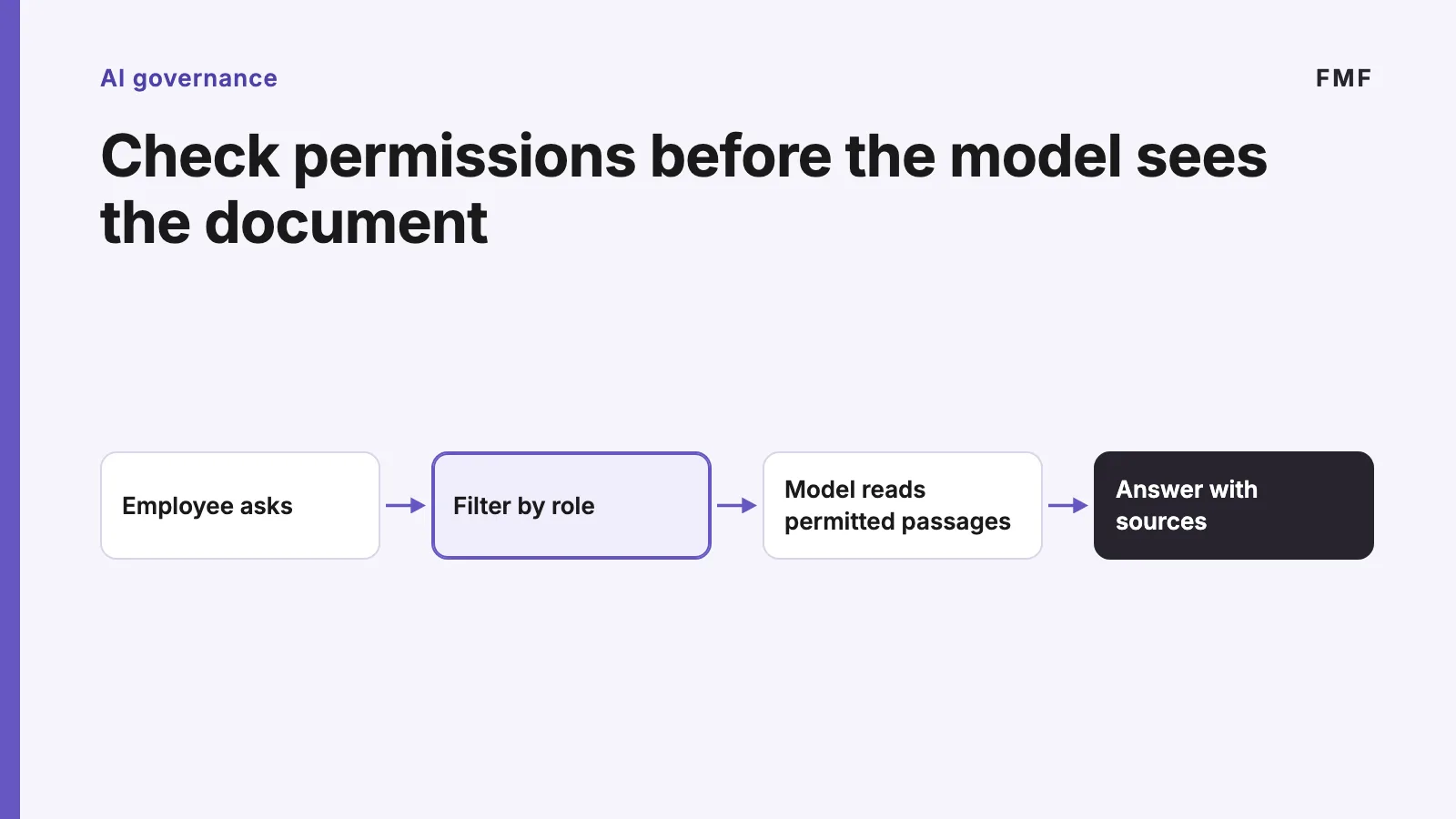
- Check where the model provider processes and stores the conversation, and whether it uses the data for training.
- Limit who on your team can read transcripts.
Our AI governance and data security checklist covers these controls in detail. It is general information, not legal advice.
What to measure
| Metric | What it tells you |
|---|---|
| Resolved without a person | Share of conversations that ended with a correct answer and no hand-off. Check a sample by hand; "no hand-off" is not the same as "correct". |
| Hand-off rate and reasons | Which questions the agent cannot answer. Each repeated reason is content to add or a rule to change. |
| Leads captured | Conversations saved with a valid contact, and how many became enquiries your sales team accepted. |
| Wrong answers found in review | From a weekly sample. One wrong price matters more than ten slow answers. |
| Time to first human reply after hand-off | Whether the team keeps the promise the agent made. |
Rolling it out
- Collect a month of real questions from chat, LINE, email and phone notes. Group them; the top groups are the agent's first scope.
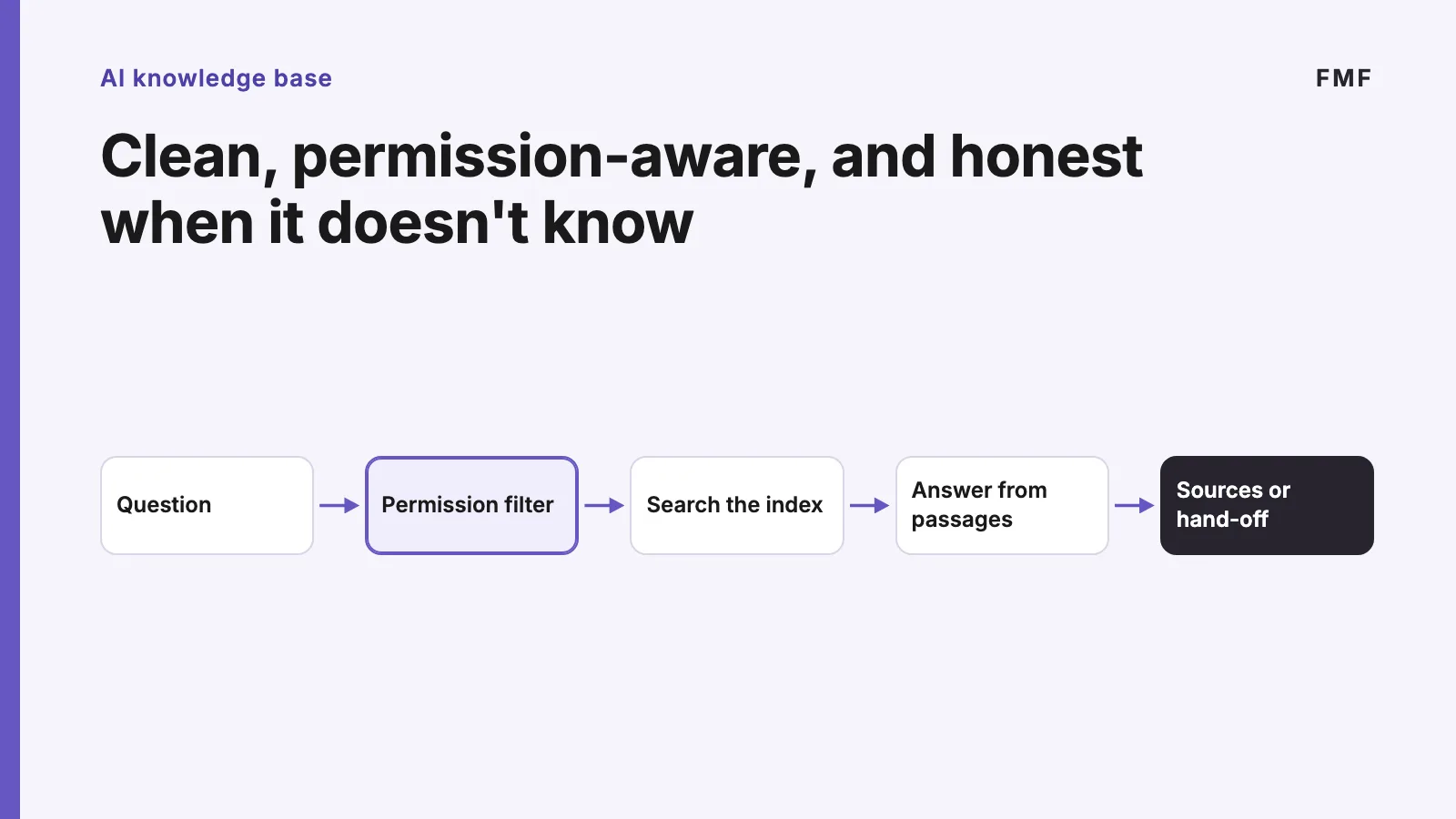
- Build the knowledge base for those groups only, with owners and review dates. Our guide to building an AI knowledge base covers the cleaning and testing.
- Write the answer policy: topics for people only, the hand-off sentence, the lead fields, tone and language.
- Run it in draft mode for a week if your channel allows it: the agent drafts, staff send. Compare drafts with what staff actually wrote.
- Go live with the off switch tested and a named owner who reviews hand-offs and a sample of answers every week.
FAQ
Will customers be annoyed to talk to a bot?
They are annoyed by bots that pretend to be people, loop, or block access to a person. Say clearly that it is an AI assistant, answer quickly from real information, and make the route to a person obvious.
Can the agent take bookings or orders?
It can, if it is connected to your booking or order system through an API. Start with the agent collecting the details and a person confirming. Let it complete bookings on its own only after you have checked its accuracy on real conversations.
How is this different from a rules-based chatbot?
A rules-based bot follows fixed menus and keywords, so it breaks on questions phrased differently. An AI agent understands free text and answers from documents, which covers far more questions, but needs the answer policy and hand-off rules above to stay within what it knows.
What does it cost to run?
Running costs are mainly model usage per conversation, hosting and the time someone spends reviewing answers. Ask any provider to estimate the monthly cost from your real message volume, not from a sample.
Next step
Export one month of customer questions, from whichever channels you have, and mark the ones a correct document could have answered. That share is the realistic ceiling for what an agent can take off your team.
Send us a sample of your customer questions. We will show you which ones an AI agent can answer, how the hand-off to your team should work, and what the first version would look like.
Discuss an AI customer service agent Chat with us on LINE